Autofocus Motor
Autofocus is the term for when a camera with its mechanics and electronics adjusts the lens's different glass elements so that the desired subject becomes in focus. Today, when buying a camera and/or a lens, the autofocus function is often taken for granted but that has not always been the case and there are still things to watch out for.
On older cameras, there was no autofocus. The photographer had to adjust and focus manually with the focus ring on the lens. When autofocus technology was introduced in the early 1980s, it quickly became a standard in cameras and later on also lenses.
Read more about the history of the autofocus on Wikipedia
When you, on a newer camera, press the shutter button halfway to focus, it's a motor in either your camera or lens that ensures that the lens elements move and align themselves to put the object in focus. The autofocus motor is either in the lens or the camera, sometimes in both. However, there are both lenses and cameras without an autofocus motor and would they be combined you as a photographer would have no possibility to autofocus.
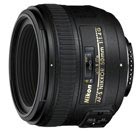
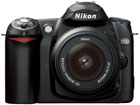
If we look at these four products; two lenses and two cameras where one version has a built-in autofocus motor and the other one has not.
Our test gear
Out of these products below we can altogether get four different combinations.
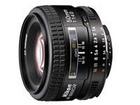
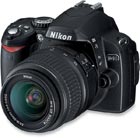
Nikon AF 50mm f/1,4 D + Nikon D40
- Ouch! This combo does not support autofocus since neither the camera nor lens have a built-in AF motor
Nikon AF-S 50mm f/1,4 G + Nikon D40
- Great! This combo will support autofocus since the lens has a built-in AF motor
Nikon AF 50mm f/1,4 D + Nikon D50
- Great! This combo will support autofocus since the camera has a built-in AF motor
Nikon AF-S 50mm f/1,4 G + Nikon D50
- Great! This combo will support autofocus since both the camera and the lens has a built-in AF motor
Importance of having an autofocus motor is clear
Of the four different combinations above, we can see that as long as there is a built-in autofocus motor in either the lens or the camera autofocus will be supported and work for you as a photographer. On Lensora, on each camera and lens product page, you will be able to see available and compatible lenses or cameras. We have avoided displaying and presenting combinations of lenses and cameras that together wouldn't have the possibility to autofocus. If you go visit the page of Nikon AF 50mm F1.4 D you will not see that Nikon D40 is listed as a compatible camera and the other way around, since both of them are missing an autofocus motor.
